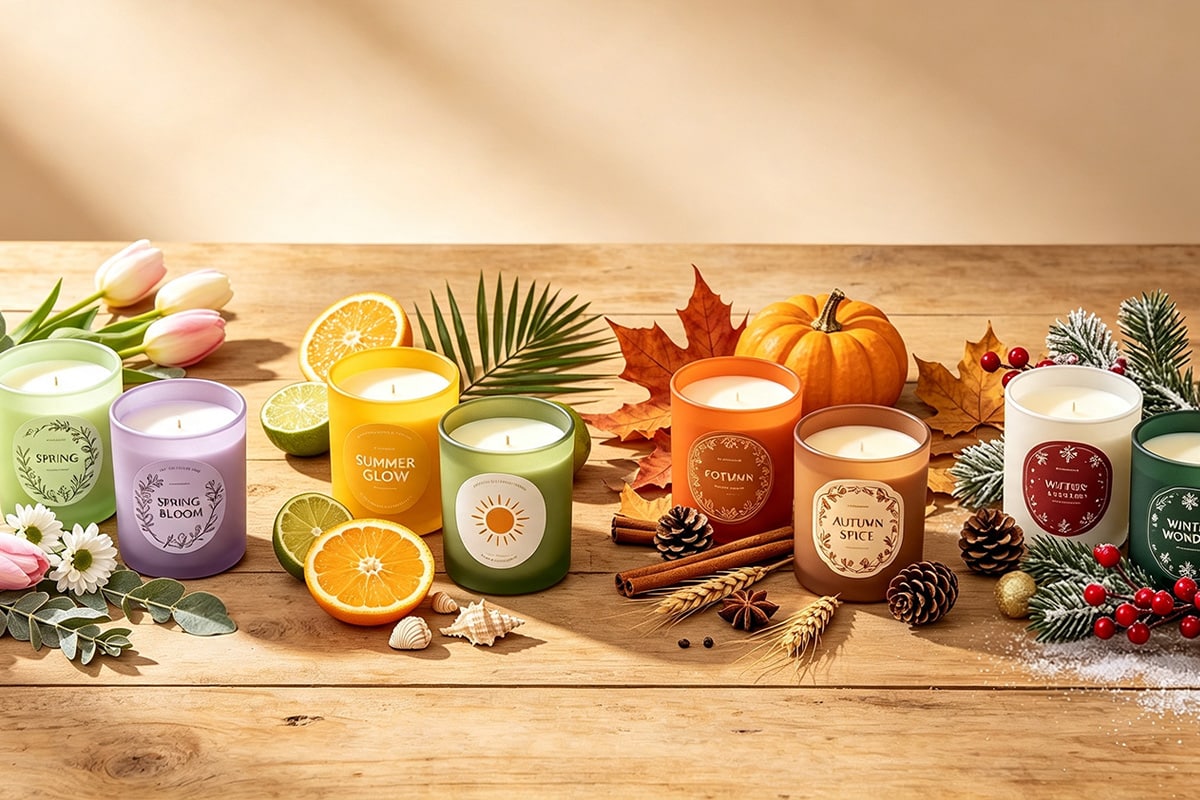









Al poner en marcha una marca de velas, una de las primeras y más importantes decisiones a las que te enfrentarás es elegir entre trabajar con fabricantes de velas personalizadas o abastecerse a través de proveedores de marca blanca. Aunque ambas opciones permiten lanzar productos al mercado, responden a modelos de negocio fundamentalmente diferentes, requieren distintos niveles de inversión y dan lugar a resultados muy distintos para tu marca.
Comprender esta distinción antes de dar el paso a la fase de producción puede ahorrarte meses de tiempo perdido y evitarte un costoso replanteamiento más adelante. Esto es lo que necesitas saber.
¿Qué es un proveedor de marca blanca?
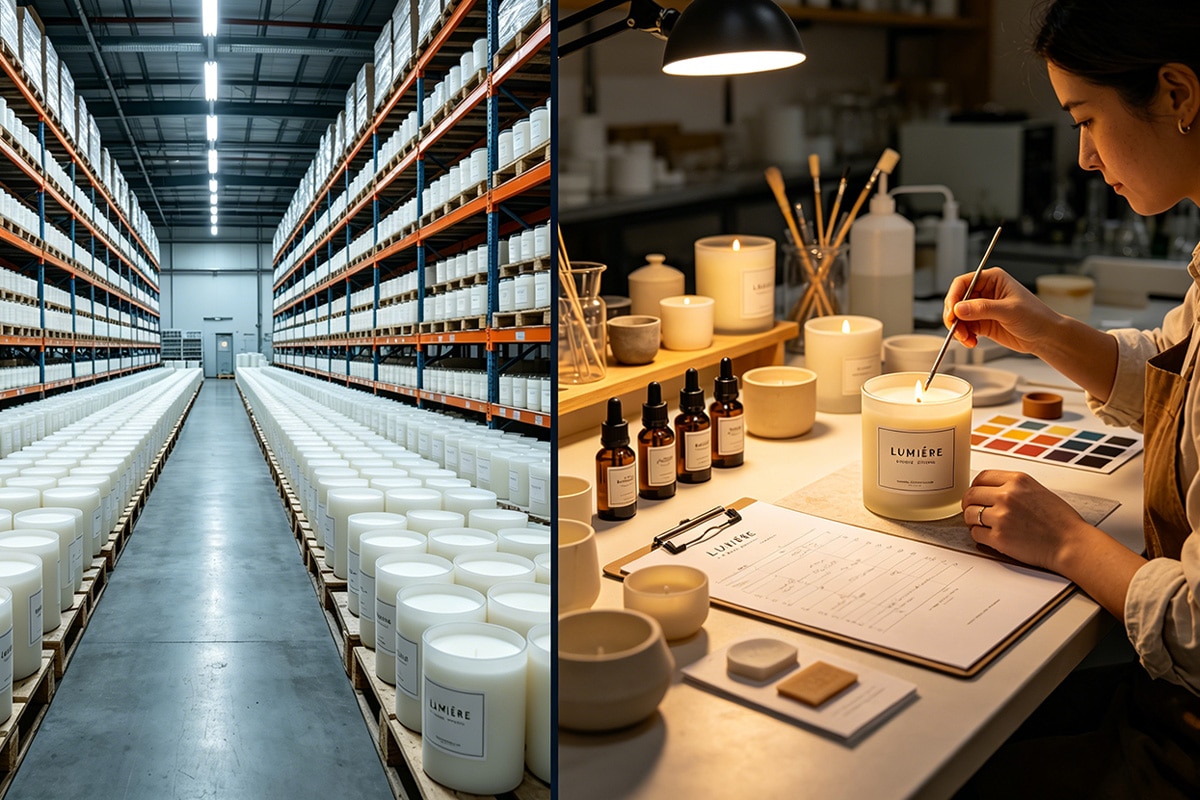
Un proveedor de marca blanca fabrica velas ya preparadas que cualquier empresa puede comprar y comercializar con su propia marca. El producto ya existe: la fórmula de la cera, el diseño del recipiente, el perfil de fragancia y el formato del embalaje vienen predeterminados por el proveedor. Tu función se limita a seleccionar productos de su catálogo, aplicar tu etiqueta y realizar pedidos al por mayor.
El modelo de marca blanca prácticamente no requiere trabajo de desarrollo de producto, por lo que resulta muy atractivo para muchos nuevos participantes en el mercado. En cuestión de semanas puedes tener velas en tu estantería virtual. Los proveedores suelen anunciar cantidades mínimas de pedido reducidas, lo que reduce las barreras de entrada para quienes se inician en el mundo de las marcas.
Sin embargo, las desventajas son importantes. El producto es idéntico en todas las marcas que compran al mismo proveedor. Tus únicos puntos de diferenciación son tu etiqueta, tu marketing y tu precio. Si tu proveedor cambia las fórmulas de las fragancias o deja de fabricar un envase, no tienes ningún control. En la práctica, estás alquilando espacio en las estanterías dentro de la línea de productos de otra empresa, y el valor que generas pertenece a tu marca solo mientras sigas comprando ese artículo concreto.
¿Qué es un fabricante de velas personalizadas?
A fabricante de velas personalizadas fabrica productos según tus especificaciones exactas. Tú decides la fórmula de la cera, la mezcla de fragancias, el diseño del recipiente, el tipo de mecha, la ubicación de la etiqueta y la configuración del embalaje. Cada aspecto del producto se crea a medida para tu marca y no puede ser replicado por ningún otro comprador.
La fabricación a medida es un proceso de desarrollo colaborativo. Trabajas con el equipo de I+D del fabricante para perfeccionar los perfiles olfativos, probar el rendimiento de la combustión, ajustar el tamaño de las mechas y comprobar la resistencia del embalaje. Esta fase suele durar varios meses e incluye múltiples rondas de muestras. El producto pasa a ser exclusivamente tuyo.
Este modelo te permite tener el control total sobre la identidad de tu producto. Puedes proteger las mezclas de fragancias, los diseños de los envases e incluso los formatos de embalaje. Tu marca no compite con otras marcas por productos idénticos, sino por la experiencia única que ofrece tu producto. Con el tiempo, esta exclusividad genera un valor de marca genuino que los competidores no pueden imitar.
La diferencia real en el coste
La marca blanca parece más barata al principio. El coste por unidad suele ser menor, ya que el proveedor ya ha amortizado los gastos de desarrollo entre muchos otros compradores. No hay que pagar tasas de muestreo, ni costes de utillaje, ni cuotas mínimas de desarrollo.
Velas personalizadas requieren una inversión inicial en I+D. Los costes de muestreo, los gastos de utillaje para la fabricación de envases a medida y los plazos de desarrollo prolongados se suman a los gastos iniciales. Sin embargo, el coste por unidad se vuelve más competitivo con el tiempo a medida que aumentan los volúmenes, y el valor de marca que se genera gracias a un producto único compensa con creces el sobrecoste inicial de desarrollo.
¿Qué modelo es el más adecuado para ti?
Si necesitas evaluar rápidamente la demanda del mercado, comprobar la adecuación del producto al mercado o entrar en el mercado con un capital mínimo, la fórmula de marca blanca es un punto de partida práctico. Te permite experimentar con diferentes categorías de productos sin tener que comprometerte con grandes cantidades mínimas de pedido ni con presupuestos de desarrollo elevados. Muchas marcas de éxito empiezan así.
Si estás creando una marca a largo plazo con una identidad propia, fabricantes de velas personalizadas son la única vía viable. La diferenciación requiere tener el control sobre el producto, y ese control exige invertir en desarrollo. Las marcas que dependen exclusivamente de los productos de marca blanca se ven atrapadas en una competencia de precios, sin poder lograr una diferenciación duradera.
El término medio
Algunos propietarios de marcas comienzan con productos de marca blanca para generar ingresos iniciales y, posteriormente, pasan a fabricar a medida sus artículos más vendidos. Este enfoque híbrido te permite evaluar la demanda antes de realizar una inversión considerable, al tiempo que vas creando gradualmente una cartera de productos exclusivos que no pueden ser copiados.
Conclusión
La marca blanca te permite salir al mercado más rápido, pero genera valor para el proveedor. La fabricación a medida lleva más tiempo y supone un mayor coste inicial, pero genera valor para tu marca. Si tu objetivo es crear una marca duradera y diferenciada, fabricantes de velas personalizadas son, en definitiva, la mejor inversión a largo plazo.